Makeup expiration · 3 min read
How to store makeup so it lasts
In short: Keep makeup somewhere cool, dry and out of direct sunlight, with lids closed tightly. A bedroom drawer beats a steamy bathroom. Clean brushes regularly and keep products out of hot cars.
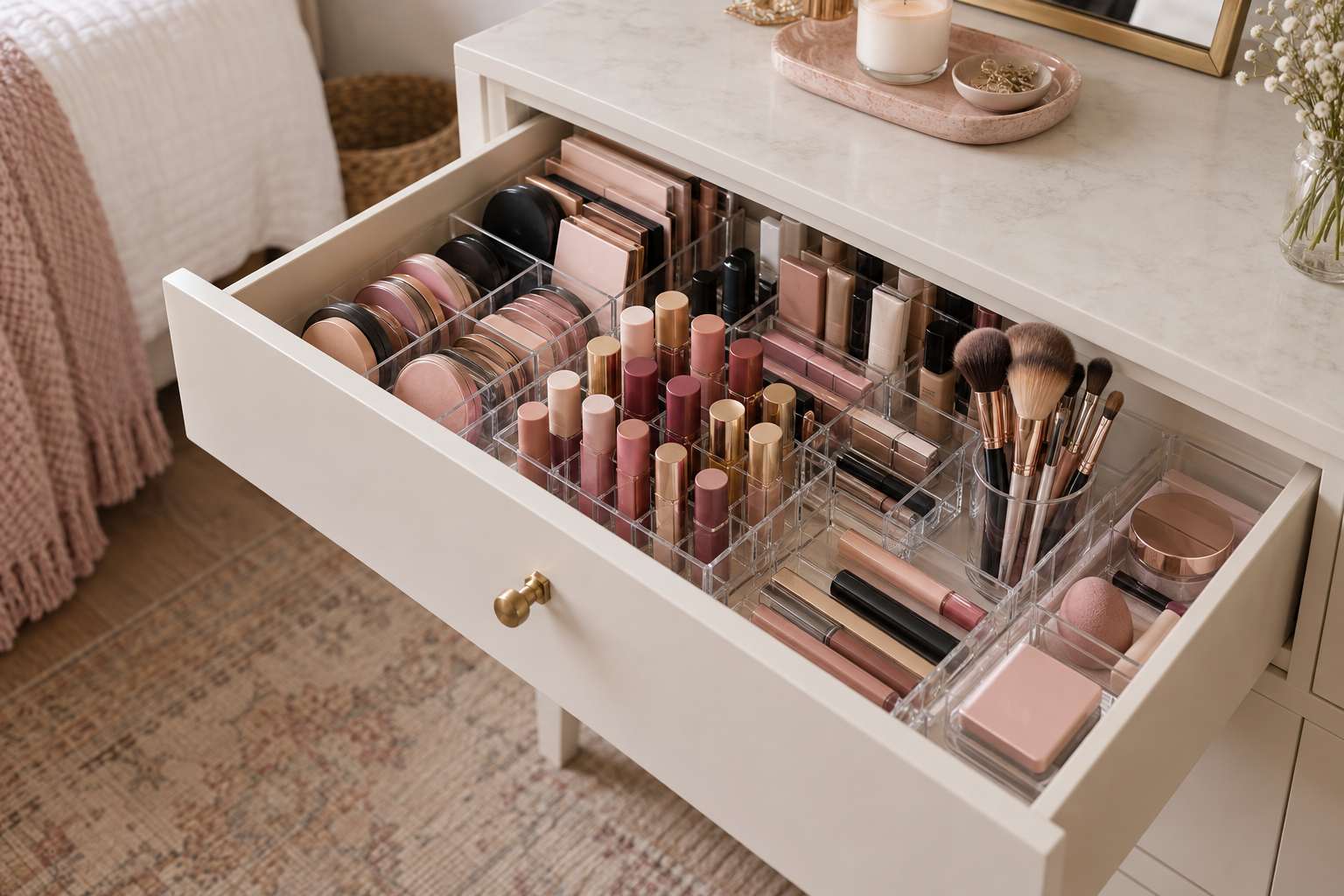
Where you keep your makeup affects how long it lasts. Heat, light, humidity and air all speed up the changes that make a product go off. Good storage won’t make a product last past its Period After Opening, but bad storage can cut it short.
The basic rules
The American Academy of Dermatology recommends storing cosmetics in a dry, clean space at room temperature, out of direct sunlight, and replacing all caps and lids securely after each use. That covers most of it.
The INKEY List gives a useful temperature range for skincare: a stable 15 to 25°C (59 to 77°F), away from direct sunlight and with low humidity. Stable is the important word. Big swings in temperature are as unhelpful as heat itself.
The worst places to keep makeup
The INKEY List names the places to avoid: a windowsill, an open bathroom shelf beside the shower, the ledge around a bathtub, the top of a radiator, and a car.
The car deserves a special mention. The FDA warns that heat, such as in a hot car, can make preservatives break down and let bacteria and fungi grow faster. For sunscreen, the FDA also recommends keeping containers out of direct sun, for example wrapped in a towel or kept in the shade on hot days.
Why the bathroom is a problem
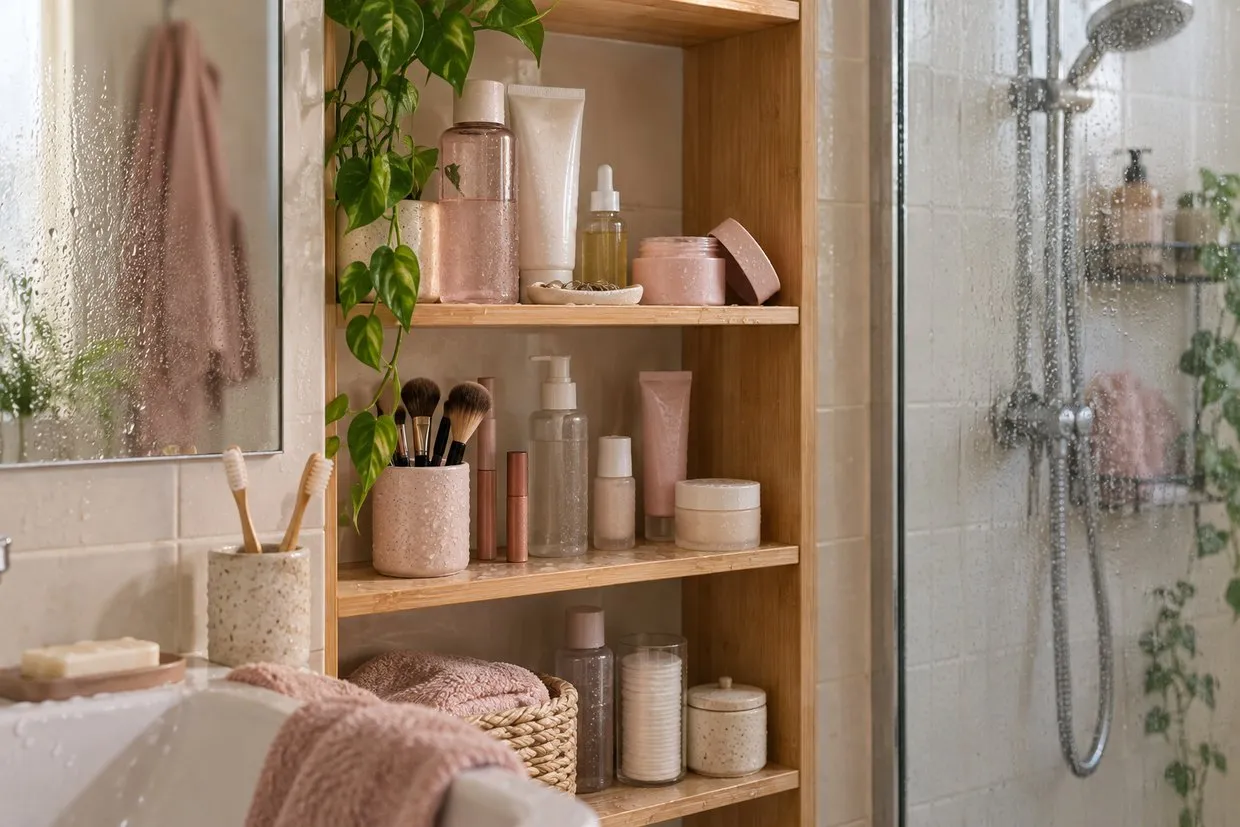
Most of us keep makeup in the bathroom, and it is one of the least suitable rooms in the house. Showers create heat and steam every day, and water splashes into open products. The INKEY List specifically advises storing cleansers away from shower steam.
If you can, move the bulk of your collection to a bedroom drawer or a closed cabinet, and keep only what you use daily in the bathroom.
Keep air and fingers out
Close every product properly after use. Air dries out formulas and speeds up oxidation, which is what turns foundations darker and vitamin C serums yellow or brown.
Fingers are the other problem. Dipping into jars adds skin oil and bacteria. A small spatula or clean brush keeps jar products cleaner. The FDA also warns against adding water, or worse, saliva, to revive a dried product, since that introduces bacteria.
Brushes and sponges
Tools touch your skin and then go straight back into your products, so they need cleaning. The American Academy of Dermatology suggests cleaning brushes every 7 to 10 days and sponges after every use. Let them dry fully before putting them away.
Products with special needs
A few products do better with extra care:
- Nail polish: essie says polish can be stored in the fridge or freezer, and recommends keeping it somewhere cool and out of direct sunlight.
- Retinol and some serums: some must be refrigerated after opening. Check the label and see our retinol guide.
- Perfume: keep it cool and dark, away from the bathroom. See our perfume guide.
- Sunscreen: keep it out of direct sun and heat, and replace it by its expiration date.
Write down the date
Storage only works alongside knowing how old things are. Note the date you open each product, then use our expiration calculator or an app like Makeup Shelf to see when it is due. Our PAO symbol guide explains the numbers on the pack.
FAQ
Should I keep makeup in the fridge?
Most makeup doesn't need it. Some products benefit from cool storage, like nail polish, and some retinol serums must be refrigerated after opening. Always follow the label.
Is the bathroom a bad place for makeup?
It is one of the worst, because of heat and steam from showers. A bedroom drawer or closed cabinet is better.
Sources
- When to toss your makeup and sunscreen, American Academy of Dermatology. Accessed September 24, 2026.
- Shelf Life and Expiration Dating of Cosmetics, U.S. Food and Drug Administration. Accessed September 24, 2026.
- Skincare Expiry Dates, Shelf Life and Storage, The INKEY List. Accessed September 24, 2026.
- Sunscreen: How to Help Protect Your Skin from the Sun, U.S. Food and Drug Administration. Accessed September 24, 2026.
- Frequently Asked Questions, essie. Accessed September 24, 2026.