Project Pan · 3 min read
How to declutter your makeup collection
In short: Take everything out, toss anything expired or changed, then keep only what you like and use. Start with eye products and liquids, since they go off first.
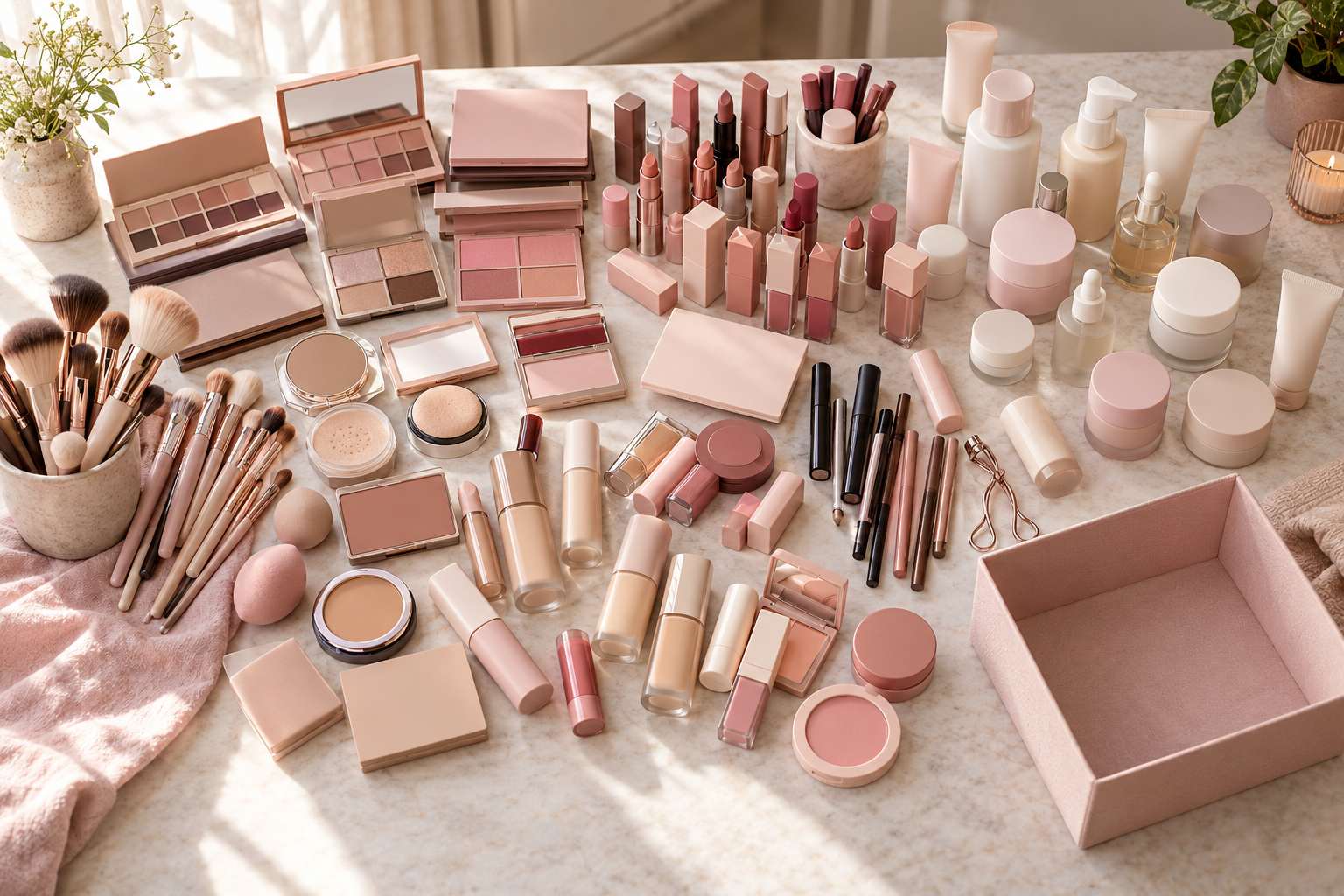
Decluttering makeup is easier than it sounds, as long as you do it in the right order. Toss what is unsafe first, then decide what to keep. Leave the hard emotional choices for the end.
Step 1: Take everything out
Gather every product in one place: bathroom, bags, drawers, the lipstick in your coat pocket. Seeing it all together is the point. Most people own far more than they realize, and that alone changes how you feel about buying more.
Sort into rough groups as you go: face, eyes, lips, cheeks, skincare, tools.
Step 2: Toss the eye products first
Eye products are the most important to get right, and the easiest to decide on. The American Academy of Ophthalmology recommends throwing away eye makeup after three months, and replacing everything you used during an eye infection. The FDA notes that manufacturers usually recommend discarding mascara two to four months after purchase.
If you can’t remember when you opened a mascara or liquid liner, it is almost certainly older than that. Let it go.
Step 3: Check everything else for signs
Next, look at each product. The American Academy of Dermatology lists signs that makeup should go:
- It clumps, like old mascara or eyeliner.
- It has changed consistency, like foundation that separates.
- It crumbles or falls apart.
- It smells bad.
- It looks dry and flaky, or runny.
- The color has changed.
- It feels different on your skin.
Anything with one of those signs goes, however much it cost.
Step 4: Use the PAO symbol
For products that look fine, check the Period After Opening symbol, an open jar with a number like 12M. Under the EU Cosmetics Regulation, products that last longer than 30 months carry this symbol, which tells you how many months they are good for after opening. Our expiration calculator works out the date for you, and our PAO symbol guide explains how to read it.
Step 5: Decide what to keep
Now for the harder part. With the unsafe products gone, ask two questions about everything else: do I like it, and do I use it?
Products that pass both stay. Products you like but never use are good candidates for a Project Pan list. Products you don’t like can go, even if they are new. Keeping them out of guilt doesn’t make them any more useful.
Duplicates are worth a look too. If you have five similar nude lipsticks, keep your favorite one or two and use the rest up first.
Step 6: Store what’s left well
Good storage makes everything last longer. The American Academy of Dermatology recommends a dry, clean space at room temperature, out of direct sunlight, with caps and lids closed tightly. A drawer or shelf in a bedroom is often better than a steamy bathroom. Our guide on how to store makeup has more detail.
Step 7: Keep it from coming back
A “one in, one out” rule works well after a declutter: when you buy something new, something similar has to be finished first. Writing down the date you open each product helps too, because it makes the next declutter much faster.
FAQ
Can I donate old makeup?
Opened makeup is usually not accepted for hygiene reasons. Some charities accept unopened products. Check with them first.
How often should I declutter?
A quick check every few months keeps things manageable. Eye products are worth checking more often, since they expire fastest.
Sources
- When to toss your makeup and sunscreen, American Academy of Dermatology. Accessed September 24, 2026.
- How To Use Cosmetics Safely Around Your Eyes, American Academy of Ophthalmology. Accessed September 24, 2026.
- Shelf Life and Expiration Dating of Cosmetics, U.S. Food and Drug Administration. Accessed September 24, 2026.
- Regulation (EC) No 1223/2009 on cosmetic products, Article 19, European Union. Accessed September 24, 2026.