Project Pan · 3 min read
How to hit pan on your makeup
In short: To hit pan, use the product every day, use it in more than one way, and keep it clean so it doesn't harden. Some products are big enough that finishing them takes years, so pick your battles.
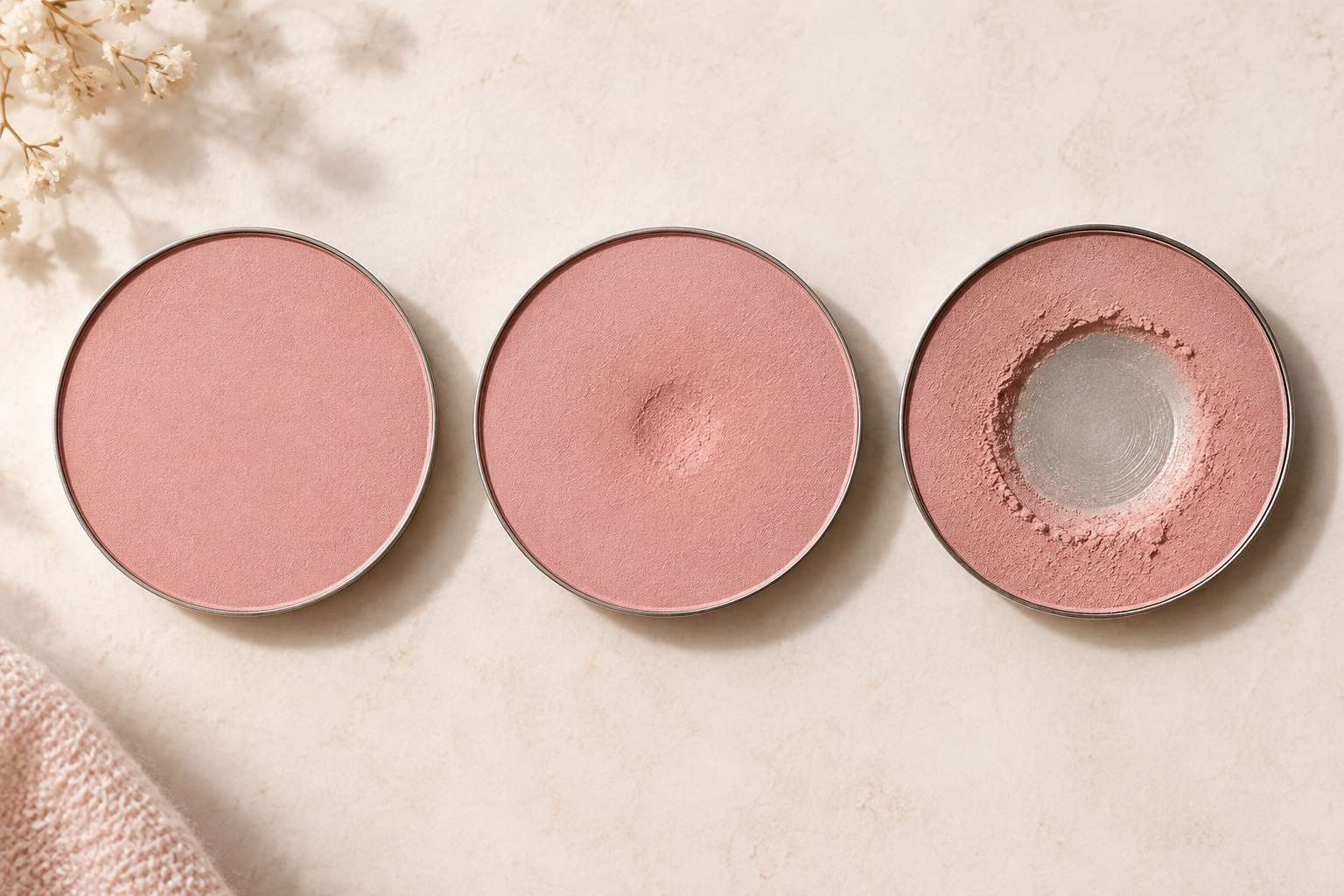
Hitting pan means using a pressed powder until the metal pan at the bottom starts to show through. It is the visual proof that you are actually using something up, which is why it gave Project Pan its name.
It is also harder than it sounds. Pressed powders last a long time. Revlon’s own guide gives powder eyeshadow and blush 24 months after opening, and some pans are big enough that you could use them daily for longer than that. So it helps to be strategic.
Use it every day
This is the obvious one, and it matters most. A product you reach for once a week will barely move. Put your pan products in front of everything else, or in a small bag you use daily, so they are the easy choice.
If you have several similar products, set the others aside for now. Using three blushes in rotation means none of them will go down noticeably.
Use it in more than one way
Many powders work in more places than the label says. A matte bronzer can double as a transition eyeshadow. A blush can go on the lids. A neutral eyeshadow can fill in brows. Using one product in two places roughly doubles how fast it goes.
Check that a product is suitable for the area first. Not every shade or formula is safe near the eyes, and anything that irritates should come off your list.
Pick the right brush
Dense brushes pick up more product than fluffy ones. If you want a powder to go down faster, a denser brush helps. You can also build up coverage a little more than usual. The goal is to use it, not to waste it, so don’t tap product off into the sink.
Keep the surface working
Pressed powders sometimes develop a hard, shiny layer that won’t pick up on a brush. This is often called hard pan, and it usually comes from oils on fingers or dirty brushes. It can make a product feel finished when it isn’t.
Clean brushes help prevent it. The American Academy of Dermatology suggests cleaning makeup brushes every 7 to 10 days. If a hard layer has already formed, gently scraping the top with a clean tool can bring the powder back. If the product also smells strange, has changed color or crumbles, the American Academy of Dermatology lists those as signs to throw it away instead.
Know when to stop
Some products will not be finished before they go off, and that’s fine. A large palette might have 20 shades that you will never use at the same rate. Bustle’s reporting on the trend notes that people take very different approaches, and plenty of them treat big palettes as a long project rather than a race.
What matters is that you are using what you own. Hitting pan is a milestone, not the only measure of progress.
What to do when you hit pan
Take a photo. It feels silly, but seeing the progress is what keeps most people going. Then keep going until the product is truly finished, and add it to your list of empties.
If you are working through a longer list, our Project Pan guide and rules can help you plan the next round.
FAQ
How long does it take to hit pan?
It depends on the size of the pan and how often you use it. A small eyeshadow pan used daily goes much faster than a large bronzer used once a week.
Why is my powder hard and shiny on top?
Oil from fingers or brushes can harden the surface. Gently scraping it off with a clean tool can help, as long as the product doesn't smell or look off.
Sources
- "Project Pan" Is The Anti-Haul Movement Taking Over BeautyTok, Bustle. Accessed September 24, 2026.
- Does Makeup Expire? How to Know When to Replace Your Products, Revlon. Accessed September 24, 2026.
- When to toss your makeup and sunscreen, American Academy of Dermatology. Accessed September 24, 2026.